Go to an emergency department now if there is
- a first fit (seizure)
- a headache with repeated vomiting and drowsiness
- sudden weakness, loss of speech, confusion or loss of vision
- new weakness of the legs, numbness between the legs, or trouble passing urine, in a person with a spine tumour or cancer elsewhere
Caspian Healthcare has no emergency department. Go to a hospital with a neurosurgeon.
Signs that need a doctor soon
Brain
A new headache that keeps getting worse, especially in the morning or with vomiting; a first fit; slowly growing weakness of one side; change in personality, memory or speech; loss of hearing in one ear; double vision.
Spine
Back or neck pain that is constant, worse at night or lying down; slowly growing weakness, numbness or unsteadiness in the legs; bladder or bowel trouble.
Tests
- MRI with contrast: the main scan for brain and spine tumours. Arranged at Vijaya Diagnostic
- CT scan in some cases. Arranged at Red Hills Diagnostic Centre
- Blood tests before surgery, done 24 hours by Caspian Diagnostic Centre in the same building
- Biopsy: to confirm the type of tumour
Treatment choices
- Watch and scan: for small, slow, symptom-free tumours.
- Surgery: to remove as much as is safe, relieve pressure and get a sample. Dr. Imran operates on you himself at Mahavir Hospital or CARE Hospitals, Nampally, as there is no operation theatre at Caspian. Some tumours, such as pituitary tumours, can be reached through the nose with an endoscope.
- Radiotherapy and chemotherapy: planned with an oncologist for tumours that need them.
- Medicines to control fits and swelling.
What to bring to the consultation
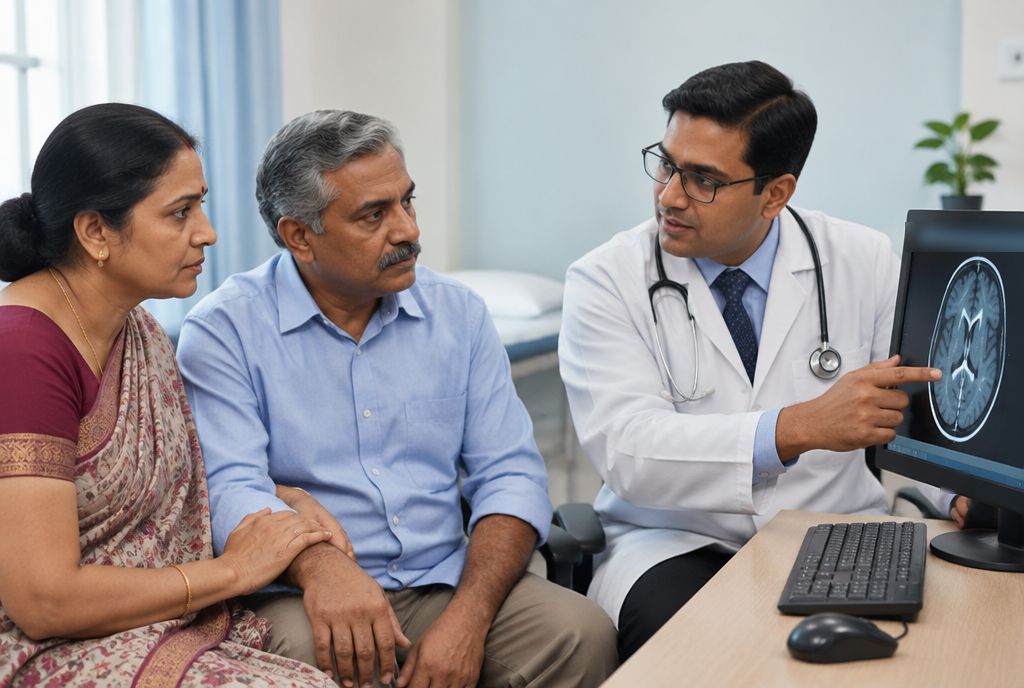
- all MRI and CT scans on CD or films, and the reports
- discharge summaries and any biopsy report
- a list of every medicine
- a family member, and your questions written down
Questions worth asking: What type of tumour is it likely to be? Does it need treatment now? What are the choices and their risks? What happens if we wait?
See Dr. Imran at Caspian
Dr. Mohammed Imran, Neurosurgeon & Spine Surgeon. MBBS, MS (General Surgery), MCh (Neurosurgery), Gandhi Medical College. Telangana Medical Council 60634.
Monday to Saturday, 4 to 5 pm. Walk in, no appointment needed. Consultation ₹600, valid for 6 days or 2 visits, whichever comes first.
Bring any MRI, CT or X-ray you have had (the films or CD and the written report), and the list of every medicine you take.
Common questions
Is every brain tumour cancer?
No. Many common tumours, such as meningiomas, schwannomas and most pituitary tumours, are benign (not cancer). They can still cause problems by pressing on the brain or nerves, and may need treatment, but they do not spread through the body.
My scan found a small tumour by chance. Does it need an operation?
Not always. Small tumours found by chance and causing no symptoms, such as many small meningiomas, are often watched with repeat scans. Treatment is offered if they grow or start causing symptoms.
How is the type of tumour known?
The scan gives clues, but the exact type is usually confirmed by looking at a piece of the tumour under the microscope (biopsy), taken during an operation or with a needle.
Should I get a second opinion?
It is reasonable and common before a major decision, especially for surgery. Bring all the scans on CD, the reports and the discharge summaries. Second opinions are a normal part of care.
Will I need radiotherapy or chemotherapy?
It depends on the type and grade of the tumour. Benign tumours that are fully removed often need nothing more. Others need radiotherapy, chemotherapy or both, planned with an oncologist after surgery.
Medically reviewed by Dr. Mohammed Imran, Neurosurgeon & Spine Surgeon, Telangana Medical Council 60634. Last reviewed 13 November 2026. General information for patients of Caspian Healthcare: your own doctor’s advice comes first.