COPD · LUNGS AND BREATHING
COPD: breathlessness that is not just age or weight
COPD (chronic obstructive pulmonary disease) is long-term damage to the airways and lungs that makes it hard to breathe out. It includes what used to be called chronic bronchitis and emphysema.
Many people live with it for years, thinking the breathlessness is just age, weight or being unfit. It cannot be reversed, but treatment makes a real difference to how you breathe and how often you end up in hospital.
Call 108 now if
- you are breathless at rest, or cannot finish a sentence
- your lips or fingertips look blue or grey
- you are confused or unusually drowsy
- your reliever inhaler is not helping
Caspian Healthcare has no emergency department, no ICU and no ventilator. For any of these, call 108 or go straight to a hospital with an emergency department.
Who gets COPD
- Smokers and ex-smokers, including beedi and hookah
- Women who cooked for years on a wood, coal or dung fire (chulha). In India this is a major cause, even in people who never smoked
- People who worked for years in dust, smoke or fumes
- People whose lungs were damaged by TB in the past
The signs
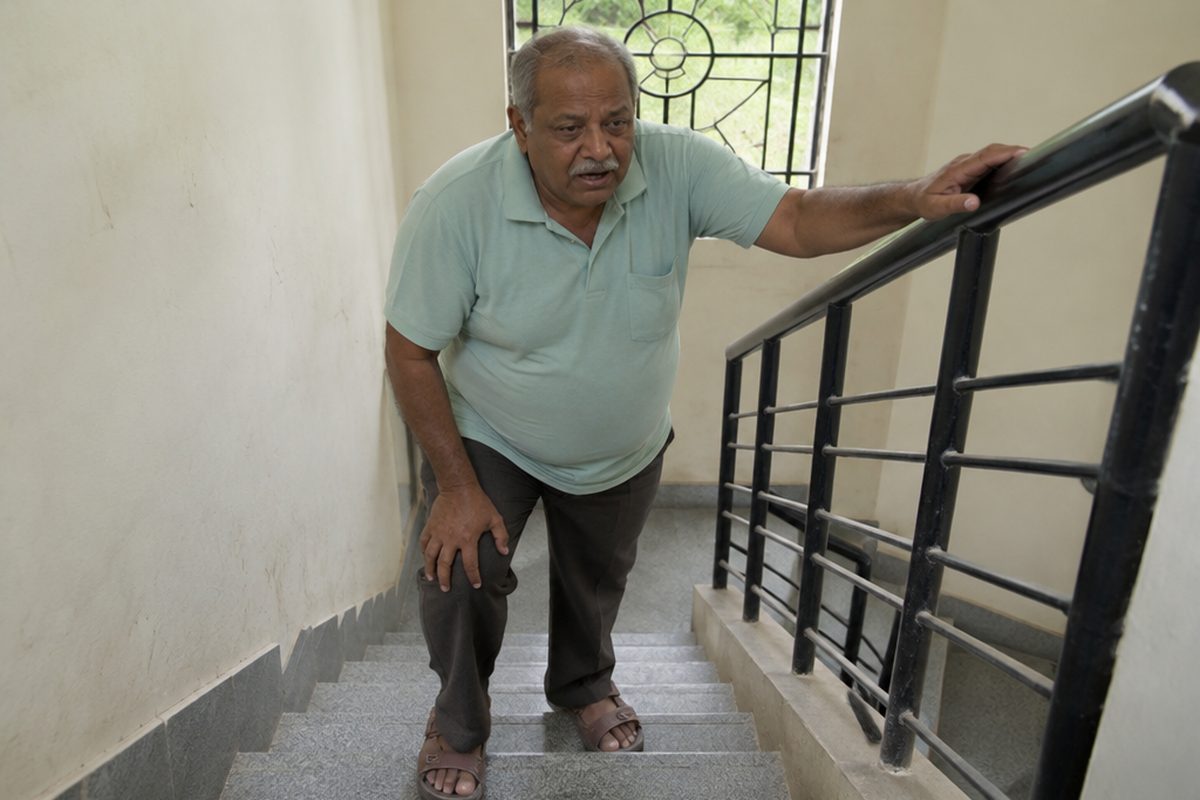
- Breathless on stairs, walking fast or carrying things, slowly getting worse over the years
- A cough most days, often with phlegm, worse in the morning
- Chest infections that take longer to clear, or come every winter
- Wheezing
How it is found
COPD is confirmed with spirometry: you blow hard into a tube before and after an inhaler. It shows whether the airways are narrowed and whether the narrowing reverses. Together with your history, this helps tell COPD apart from asthma. A chest X-ray looks for other causes of breathlessness.
Lung Profile, ₹1,199: spirometry (the breathing test), a chest X-ray and Dr. Sameer’s consultation in one visit, instead of ₹1,550 separately. What it includes.
Treatment that works
- Stop smoking. Nothing else slows COPD as much. See how to quit.
- Inhalers that keep the airways open for 12 to 24 hours. They work only if used correctly, every day. Ask to be shown how.
- Keep moving. Walking a little more each day makes breathlessness easier to live with. Getting a little breathless while walking is not harmful.
- Pulmonary rehabilitation: a planned programme of exercise and breathing training. It is one of the most useful treatments for COPD; ask the doctor about it.
- Vaccines: flu every year, and pneumonia vaccination, prevent the infections that cause flare-ups.
- A flare-up plan: know what to do when your breathing or phlegm gets worse, so treatment starts early.
A flare-up
More breathless than usual, more phlegm, or phlegm turning yellow or green, for more than a day: see a doctor the same day. Flare-ups treated early often do not need admission. A flare-up that needs a drip (intravenous antibiotics) but not intensive care can be admitted under Dr. Sameer at Caspian.
See Dr. Sameer at Caspian
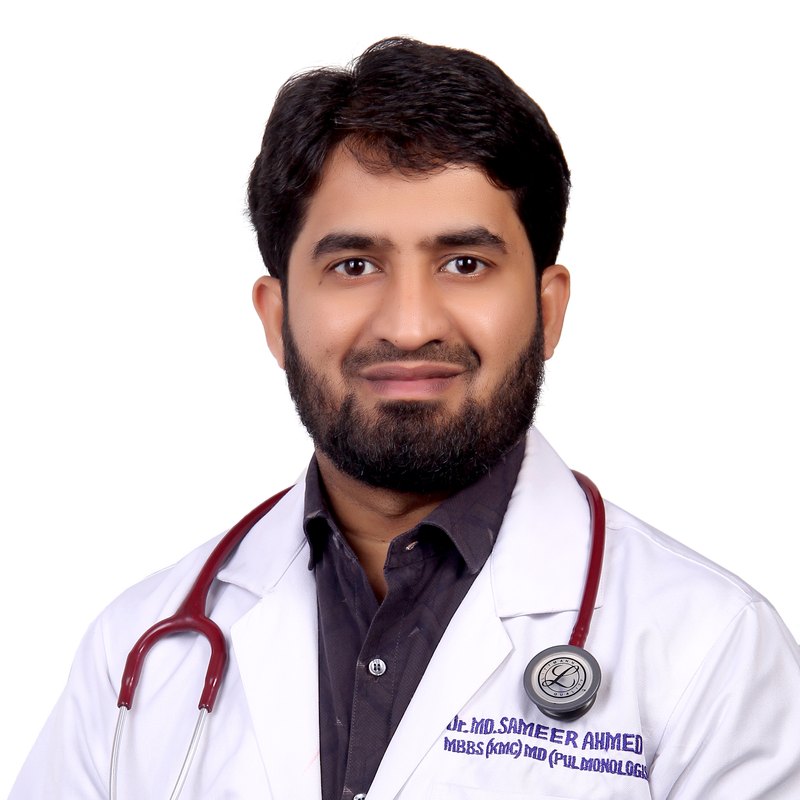
Dr. Mohammad Sameer Ahmed, Pulmonologist. MBBS (Kakatiya Medical College), MD Pulmonary Medicine (Gandhi Hospital, Secunderabad). Telangana Medical Council TGMC/FMR/01466.
Monday to Saturday, 8 to 10 pm. Consultation ₹500. Outside these hours a doctor is on duty in the building, day and night.
Common questions
Is COPD the same as asthma?
No. Asthma usually starts younger, comes and goes, and the airways open up fully with treatment. COPD usually starts after 40, gets slowly worse, and the narrowing does not fully reverse. Spirometry tells them apart, and some people have both.
Can COPD be cured?
No, the damage cannot be undone. But stopping smoking, the right inhalers, exercise and vaccines keep many people active and out of hospital for years.
I never smoked. Can I still have COPD?
Yes. In India, years of smoke from cooking fires, dust at work and old TB are common causes in people who never smoked.
Read next
Medically reviewed by Dr. Mohammad Sameer Ahmed, Pulmonologist, TGMC/FMR/01466. Last reviewed 13 November 2026. General information for patients of Caspian Healthcare: your own doctor’s advice comes first.