
For anyone on insulin or on tablets that can cause low sugar (such as glimepiride or gliclazide), and for their family.
Fill in, then print
Low sugar means below 70 mg/dL. Below 54 mg/dL is serious. If you have symptoms and no meter at hand, treat first and test later.
How it feels
Early
- Sweating, shaking
- Sudden hunger
- Fast heartbeat
- Anxiety or irritability
- Tingling lips
- Headache, blurred vision
Late, or at night
- Confusion, slurred speech, odd behaviour
- Drowsiness
- Fits or unconsciousness
- At night: sweating, bad dreams, a headache or unusual tiredness on waking
If you are awake and can swallow
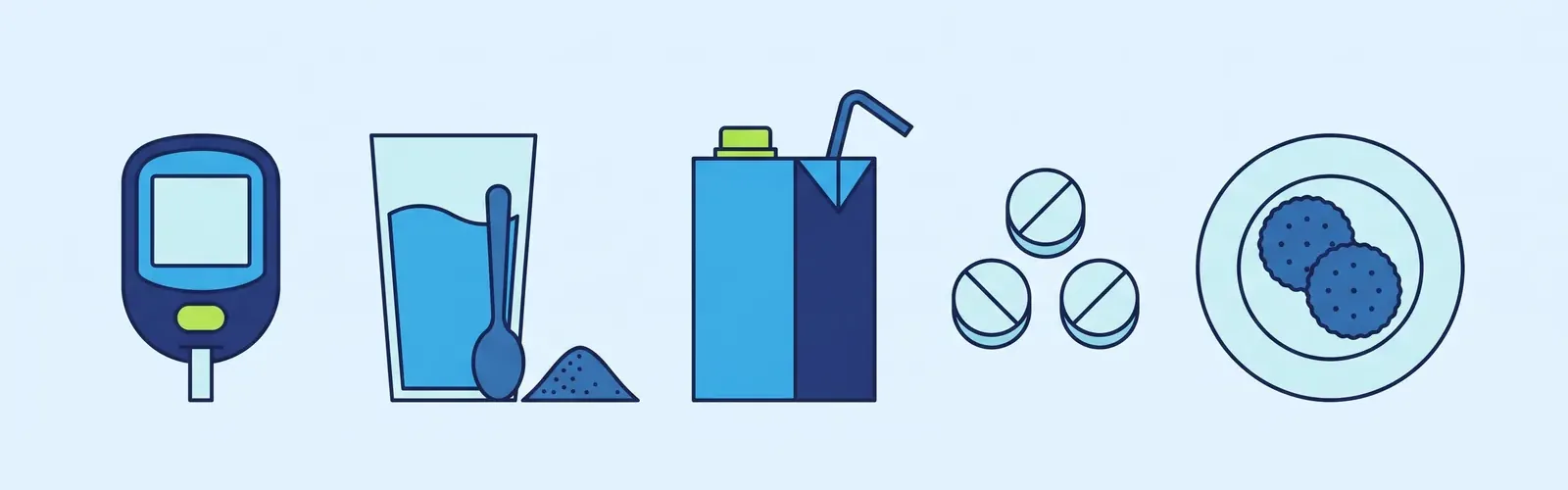
- Take 15 grams of fast sugar at once. Any one of these:
- 3 full teaspoons (1 tablespoon) of sugar or glucose powder in half a glass of water
- 150 ml of fruit juice or of a regular (not diet) soft drink
- Glucose tablets adding up to 15 grams
- Wait 15 minutes. Test again.
- Still below 70? Take the same amount again and test again after 15 minutes. Still below 70 after three rounds: go to a hospital.
- Once it is above 70, eat: your meal if it is due, or a snack such as two biscuits, a slice of bread, a fruit or a glass of milk.
Chocolate, mithai, biscuits and milk are too slow for step 1: their fat delays the sugar. Diet drinks have no sugar. If you take acarbose or voglibose, only glucose powder or glucose tablets will work.
If the person is unconscious, having a fit, or cannot swallow
- Put nothing in the mouth. No sugar, no water, no fingers.
- Turn the person onto their side.
- Give the glucagon injection or nasal spray if the doctor has provided one.
- Call 108, or take the person to the nearest hospital with an emergency department.
Afterwards, ask why it happened
- A missed, late or small meal
- More physical work or exercise than usual
- Too much insulin or a wrong dose
- Alcohol
- Injecting into a new area after using a lumpy one
- Kidney problems, or loss of weight
Tell your doctor within a day or two if
- You needed another person's help to recover. If you take glimepiride, gliclazide or a similar tablet, a bad low can come back over the next day: be seen the same day.
- You had a low at night
- You have had two or more lows in a week
- You get lows without any warning symptoms
Your dose probably needs changing. Do not wait for the next appointment.
Every day
- Carry sugar or glucose with you always, and keep some by the bed.
- Make sure your family and the people you work with know what to do.
- Driving: test before you drive. Do not drive if your sugar is below 90 mg/dL. If you feel low while driving, stop safely, switch off the engine, treat the low, and wait 45 minutes after your sugar is normal before driving again.
Questions about this sheet? Call Caspian Healthcare reception on +91 89193 41154. A doctor is on duty at all hours for problems that are not critical. Caspian has no emergency department: in an emergency call 108.
Where this comes from
- American Diabetes Association Standards of Care 2025: glycaemic goals and hypoglycaemia
- US Centers for Disease Control and Prevention: treatment of low blood sugar
- Diabetes UK: hypos
- Diabetes UK: driving and diabetes
- MedlinePlus: acarbose
Prepared by Caspian Healthcare from the sources above. Last reviewed October 2026. General information: your own doctor's written instructions come first.