What the trials actually show
Two large, long, well-run trials tell you most of what there is to know.
Read those two together and you get the real picture. Lifestyle change works, it works well enough to prevent diabetes, and the average long term result is a single-digit percentage rather than the transformation the internet promises. A meaningful minority do much better than the average and hold it for years.
Why the average is lower than the stories you hear. The people who lose thirty kilos and keep it off are real and they are not lying. They are also the ones who write about it. The people for whom it did not work are the overwhelming majority of the same starting group, and they are silent. An average from a trial counts everybody, including the ones who dropped out, which is why it is the honest number and also the disappointing one.
What separates the people it works for
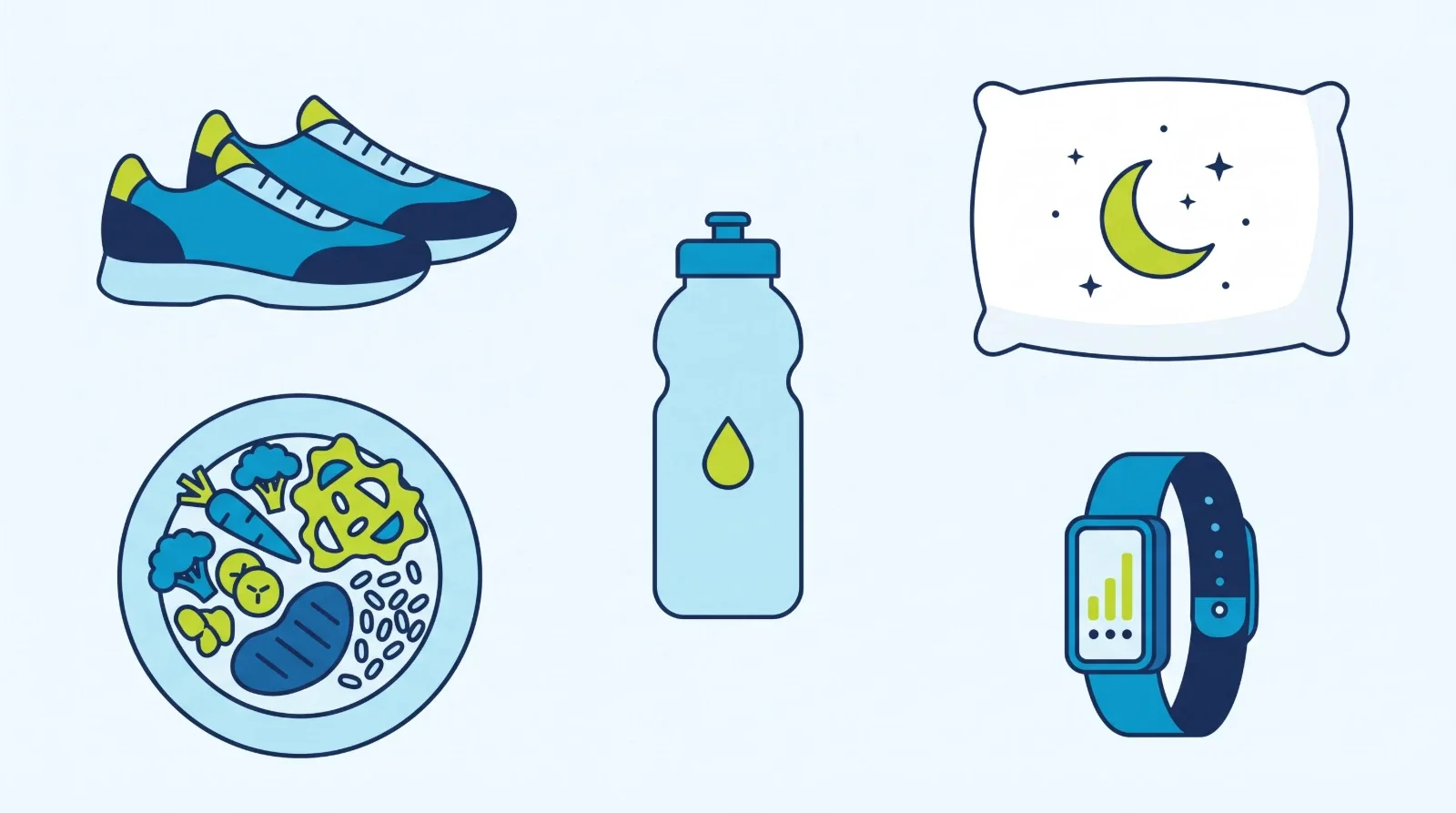
- Protein, deliberately, every day This is the single highest-yield change and it is the one Indian diets are worst at. It preserves muscle, it is the most satiating of the three macronutrients, and it is the reason two people eating the same calories get different results. The protein tool builds a day for you, with the cost shown alongside, because cost is usually the real obstacle.
- Resistance training, twice a week, progressively Not walking. Walking is excellent for your heart, your sugar and your mood, and it will not keep your muscle. Muscle is where glucose goes and what holds your resting metabolic rate up. The programme is here and needs no gym.
- Sleep, and being screened for apnoea Short and poor sleep independently drives weight gain and insulin resistance, and untreated sleep apnoea makes weight loss substantially harder. It is one of the most commonly missed diagnoses in exactly this group in India. The checklist takes two minutes.
- Measuring, honestly, on a schedule Self-reported food intake is under-reported by 20 to 50 per cent in almost everyone, including doctors, and it is not dishonesty, it is how memory works. Weigh daily and read the seven day trend, not the number. The tracker does the smoothing.
- Getting the household on board In most Indian homes the person losing weight is not the person deciding what is cooked. This one change does more than most of the rest put together, and it is why we ask you to bring whoever cooks to the first visit.
- Reviewing it, rather than white-knuckling it The published checkpoints are 2 per cent at month one, 3 per cent at month two, and 5 per cent at week twelve. Missing one is not a verdict, it is a signal to change the plan while changing it is still easy.
The parts nobody tells you
- Your body will defend the weight. As you lose, appetite hormones rise and energy expenditure falls, both more than the smaller body alone explains. This is not weakness, it is regulation, and it is the reason maintaining is harder than losing.
- The plateau at around six months is normal. It arrives for almost everybody and it is not evidence that you have started cheating.
- Activity matters beyond the weight. In the Diabetes Prevention Program, people who missed the weight target but met the activity target still did significantly better than those who met neither. If the scale is stuck, the walking is still working.
- Crash dieting has a specific, measurable cost. Losing faster than about 1.5 kg a week raises gallstone risk several fold, and faster loss lowers resting metabolic rate more than gradual loss does.
When to stop trying this alone
There is no shame in either answer, and the point of a review date is that you do not have to decide in the abstract.
- You have done it properly for six months and are under 5 per cent down, and your metabolic tests have not moved.
- You have lost weight before, more than once, and regained it every time. Repeated cycles are informative and they are not a character flaw.
- Something is actively getting in the way that treatment would fix, most often untreated sleep apnoea, untreated low mood, or a medicine you are taking that causes weight gain.
- Your risk is high enough that time matters: diabetes already present, significant liver fibrosis, established cardiovascular disease.
Equally, if this is working, keep going. Treatment is not a better version of lifestyle change; it is something you add when lifestyle change alone has not got you where your health needs you to be. The trial that put a medicine on top of a successful lifestyle programme found the two were additive, not alternatives.
Sources: Knowler WC and colleagues, Diabetes Prevention Program, New England Journal of Medicine 2002;346:393-403. Hamman RF and colleagues, Diabetes Care 2006;29:2102-2107. Look AHEAD Research Group, Obesity 2014;22:5-13. Unick JL and colleagues, Obesity 2014;22:1608-1616. Weinsier RL and colleagues, American Journal of Medicine 1995;98:115-117. Ashtary-Larky D and colleagues, British Journal of Nutrition 2020;124:1121-1132.